Reflector LED UV
- Model: UV500H
- Various Sizes
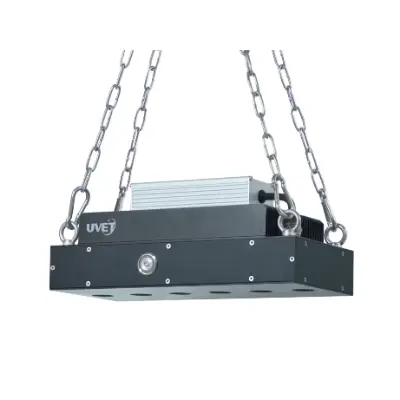
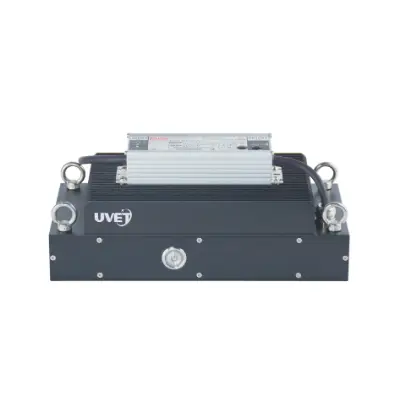
The UV500H UV LED Floodlight is designed with 6 high‑power UV LEDs to deliver a perfectly uniform beam. Engineered for precision and reliability, it is 100% free from UV‑B radiation and features a visible light filter to ensure minimal visible light emission. Fully compliant with ASTM UV‑A intensity and wavelength specifications, the UV500H UV LED Floodlight is ideal for liquid penetrant testing (LPT) and magnetic particle testing (MPT). Its robust mechanical cooling system ensures stable performance, while the IP65 rating provides dust protection and resistance to water jetting, making it suitable for demanding industrial environments.
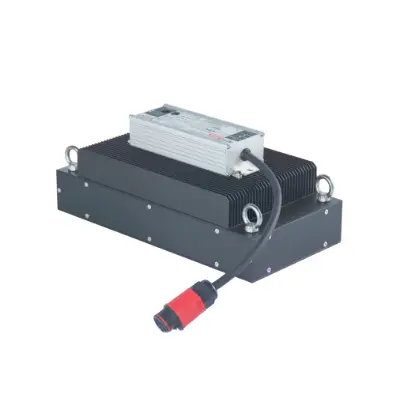


Specifications
| Part No. | UV500H |
| LED Count | 6 LEDs |
| UV Spectrum | 100% UV-B free |
| Wavelength | ASTM UV-A compliant |
| Beam Uniformity | Even beam |
| IP Rating | IP65 |
| Cooling | Mechanical |
| Installation | Overhead or in-line |
-
Descriptions

¡Diseñado específicamente para la inspección fluorescente de grandes áreas!
UV500H consta de 6 x LED UV, que ofrecen un haz muy uniforme. Está 100% libre de UV-B y los LED casi no emiten luz visible debido a un filtro de luz visible. Cumple con las especificaciones de intensidad y longitud de onda ASTM UV-A para LPT y MPT. Debido al diseño de enfriamiento mecánico, IP65 está aprobado para resistencia al polvo y al chorro de agua.
Características
- Alta intensidad UV: Proporciona una iluminación UV uniforme y de área amplia.
- Múltiples opciones de longitud de onda: Disponible en 365, 385, 395 y 405 nm.
- Larga vida útil: Vida útil operativa de 20,000 a 30,000+ horas.
- Encendido / apagado instantáneo: no requiere calentamiento, lo que garantiza la máxima eficiencia.
- Construcción duradera: carcasa con clasificación IP para resistencia al polvo y al agua.
- Sistema de enfriamiento avanzado: enfriamiento por aire o mecánico para un funcionamiento estable.
Ventajas del proyector LED UV
- Productividad mejorada: la amplia cobertura reduce el tiempo de inspección y curado.
- Ahorro de costos: El diseño de eficiencia energética reduce los gastos operativos.
- Tecnología ecológica: sin mercurio y compatible con RoHS.
- Resultados consistentes: La salida UV estable garantiza un curado e inspección confiables.
- Integración flexible: El diseño compacto permite una fácil instalación en varios sistemas.
- Confiable en entornos exigentes: Resistente a la acumulación de polvo, agua y calor.
Estas fuentes de luz de alimentos estacionarias se pueden instalar en el techo o en línea, y se pueden agrupar para proporcionar un área de cobertura aún más amplia. Es ampliamente utilizado en cabinas de inspección de END, inspección de partículas magnéticas y penetrantes fluorescentes, detección de partículas fluorescentes, inspección de estaciones de lavado, etc.
-
Applications
The UV LED Floodlight is a high‑performance ultraviolet lighting solution engineered to provide broad‑area, uniform UV illumination. Designed with advanced LED technology, it delivers powerful UV output with minimal heat generation, ensuring stable performance even in continuous operation.
With options for wavelengths such as 365 nm, 385 nm, 395 nm, and 405 nm, UV LED floodlights are ideal for industrial curing, non‑destructive testing (NDT), surface treatment, quality inspection, and medical sterilization. Compared to traditional mercury lamps, they offer instant on/off capability, longer service life, higher energy efficiency, and eco‑friendly, mercury‑free operation.
Applications of UV LED Floodlight
- Industrial UV Curing: Adhesives, coatings, and resins.
- Non‑Destructive Testing (NDT): Magnetic particle and liquid penetrant inspection.
- Quality Inspection: Detecting surface defects and verifying coatings.
- Electronics Manufacturing: PCB assembly and conformal coating curing.
- Medical Sterilization: Disinfection of equipment and surfaces.
- Surface Treatment: Enhancing durability and hardness of industrial materials.
Built with durable housings and IP‑rated protection, UV LED floodlights are suitable for demanding environments, ensuring reliable use in both industrial and scientific applications. Their modular design also allows easy installation and integration into existing systems, reducing setup time and operational costs.
-
FAQs
Q1: What is a UV LED Floodlight?
A: A UV LED Floodlight is a high‑power lighting device that provides wide‑area ultraviolet illumination using LED technology. It delivers uniform UV output for industrial, scientific, and sterilization applications.Q2: What wavelength options are available?
A: UV LED Floodlights are commonly available in 365 nm, 385 nm, 395 nm, and 405 nm, with custom wavelengths available for specific curing, inspection, or sterilization needs.Q3: What are the typical applications of a UV LED Floodlight?
A: They are used in UV curing of coatings and adhesives, non‑destructive testing (NDT), quality inspection, surface treatment, and medical disinfection.Q4: How long is the operational lifespan of a UV LED Floodlight?
A: Depending on operating conditions and cooling systems, most UV LED Floodlights provide 20,000 to 30,000+ hours of stable performance.Q5: How does a UV LED Floodlight compare to traditional mercury UV lamps?
A: UV LED Floodlights offer instant on/off switching, higher energy efficiency, longer service life, lower heat emission, and mercury‑free eco‑friendly operation, making them a superior alternative.Q6: Are UV LED Floodlights safe to use?
A: Yes. They are designed to meet international safety standards, free from harmful UV‑B radiation, and often equipped with filters to minimize visible light leakage.Q7: Do UV LED Floodlights require cooling?
A: Yes. Depending on the model, they may use air cooling or mechanical cooling systems to ensure consistent performance and extended service life.
Related Products